
Service
Precalciners
ransforming Cement Production
What is Pre-Decomposition Technology?
In modern cement production, pre-decomposition technology plays a crucial role. Central to this approach is the use of suspension preheating and pre-decomposition methods. This involves adding a precalciner—a new heat source—between the preheater and the cement rotary kiln. By injecting fuel into the precalciner, raw materials preheated to around 750°C are fed simultaneously. This enables rapid combustion and carbonate decomposition, achieving a cement raw meal decomposition rate of over 90% before reaching the rotary kiln.
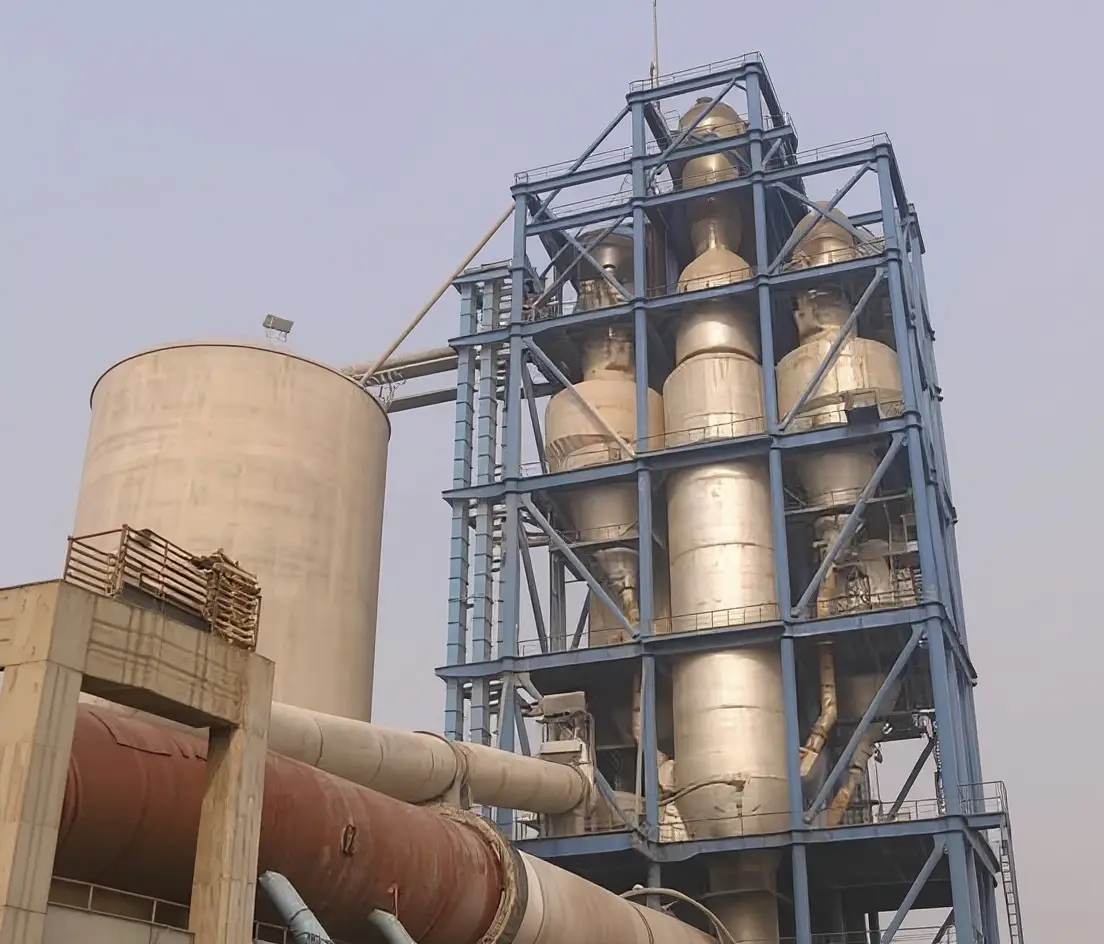
Precalciners
What is a Precalciner?
The precalciner, also known as a cement calciner, is an advanced solid-gas heat exchange system. It disperses cement raw meal in airflow, facilitating quick fuel combustion and calcium carbonate decomposition, typically within 1.5 to 3 seconds. This process partially shifts the calcining workload from the rotary kiln to the calciner, operating at a low-temperature flameless combustion between 820°C to 900°C.
Benefits of Using a Precalciner
Enhanced Efficiency and Cost Savings
Reduces the heat load and size of the rotary kiln.
Increases production efficiency and decreases construction costs.
Scalability and Environmental Benefits
Supports large-scale cement production and reduces air pollution.
Optimized Thermal Layout
Alters traditional fuel addition, optimizing the thermal configuration of the kiln system.
Improved Combustion and Decomposition
Transfers major heat-consuming carbonate decomposition to the calciner, enhancing combustion, heat transfer, and decomposition processes.
Increased Output and Longevity
Boosts output, running rate, and extends the service life of the kiln lining.
Fuel Flexibility
Improves utilization of low-quality fuels and adapts to raw materials with alkali, chlorine, sulfur, and other components.
Types of Precalciners
There are several types of precalciners, each with unique features, though they share common characteristics and functions:
Spiral-Flow Calciner
Simple structure with swirling fuel and raw meal.
Calciner with Preheating Chamber
Ensures stable fuel combustion and decomposition but is structurally complex.
Spouted Calciner
Utilizes pulverized coal and suspends materials with a hot gas jet.
Working Principle of Precalciners
Preheated raw meal (820°C to 860°C), fuel, and hot air are fed into the precalciner. Within, they are dispersed by high-speed airflow, creating a suspension at about 900°C. This environment enables flameless combustion, releasing heat that rapidly decomposes calcium carbonate via convection and radiation heat transfer. This efficient process achieves a decomposition rate of 85% to 95%, optimizing combustion, energy release, and material breakdown.
Conclusion
Precalciners revolutionize cement production by improving thermal efficiency, reducing costs, and allowing greater fuel flexibility. With advancements in this technology, companies like DMPCR offer tailored solutions to optimize and enhance cement production processes.